

Three Distinct Anatolian Manti: Kayseri, Sinop, and Tray Manti
Anatolia’s three classic manti types—Kayseri, Sinop, and tray manti (tepsi mantısı)—are distinguished from one another by their dough thickness, folding techniques, cooking methods, and sauce combinations. Kayseri manti stands out with its tiny bundle-closure and water-boiling technique, Sinop manti with its triangular fold served with walnut kernels and melted butter, and tray manti with its crispy texture achieved by baking and then reducing hot meat broth over the dough.
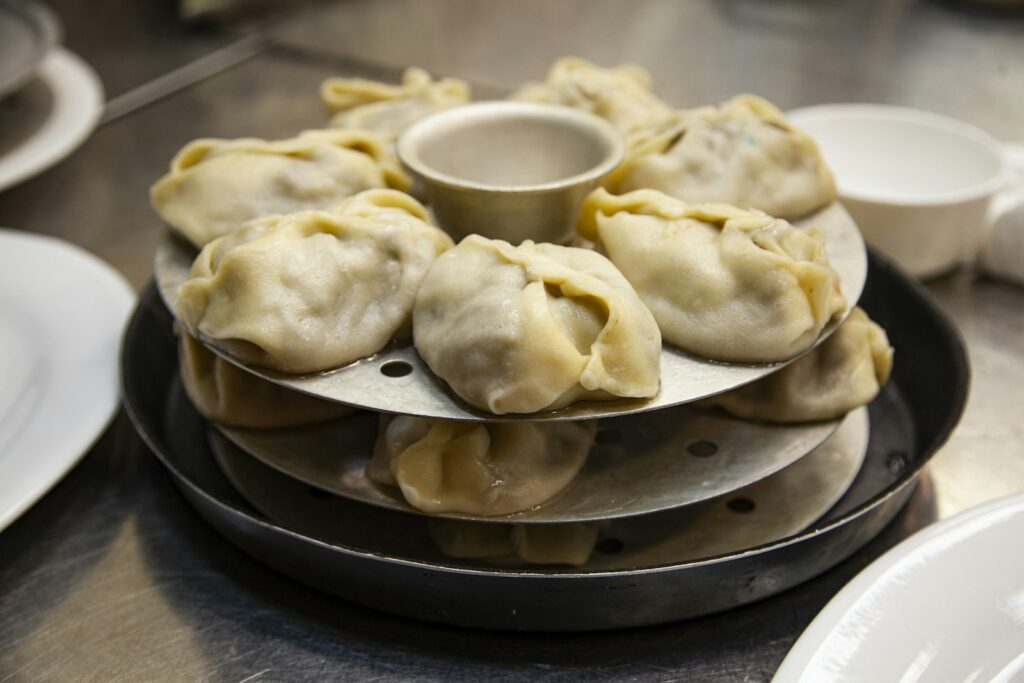
The bundle-folding technique in Kayseri manti
The fundamental defining characteristic of Kayseri manti is that dough cut into millimeter-precise squares is filled with minced meat filling and closed into tiny bundles by joining its four corners at the top point. In this technique, considered a benchmark of culinary skill, the dough must be rolled out to a thickness of approximately 1 millimeter, and the cut squares should not exceed 1 centimeter in size. A traditional standard of measurement dictates that 40 pieces of manti should fit into a single wooden serving spoon.
The inner filling of Kayseri manti consists of lean ground beef, very finely grated or hand-minced onion, black pepper, and salt. Squeezing out the excess water from the onion is a critical step to prevent the dough from softening and tearing. The bundle-folded dough pieces are boiled in salted bubbling water for about 8 to 10 minutes. A portion of the cooking water is incorporated into the sauce to bind its starchy structure seamlessly. During plating, garlic yogurt and sizzled butter infused with red pepper flakes and dried mint are drizzled over the top.
As you explore different regions of Anatolia, you can observe how pastry traditions change from area to area. While exploring cultural and flavor stops during a tour of the Historic Peninsula, you can gain a clearer understanding of the place traditional cuisine holds in urban culture.
What makes Sinop manti walnut-topped and buttery
The key element that sets Sinop manti apart from other regional recipes is that its dough is closed into vertical triangles and served topped with crushed walnut kernels and melted butter. The rich walnut harvest of the Black Sea region forms the dominant flavor component of the dish. Its dough is cut wider than the Kayseri version; usually, dough squares measuring 3 to 4 centimeters are filled with minced meat and closed into a amulet shape or vertical triangle.
The cooking process is similarly performed by boiling in plenty of salted water. However, two different traditional preferences are applied when preparing the serving plate. In the first method, strained yogurt is spread on the base of the plate, hot boiled manti is arranged on top, and coarsely chopped walnuts with sizzling butter are added as the top layer. In the second method, yogurt is completely excluded, and the manti is combined directly with walnuts and butter. This approach allows the aromatic oils of the dough and walnuts to be experienced directly.
Plant-based ingredients and tree nuts have deeply rooted origins in Turkish cuisine. To learn more details about these ingredients used to balance protein and fat in grain-based dishes, you can check out our plant-based nutrition guide.
Baking time for crispy tray manti
The ideal baking time for crispy tray manti (tepsi mantısı) is approximately 25 to 30 minutes in a preheated oven at 180°C (356°F) until the dough turns golden brown on top and bottom. This baking step removes surface moisture from the dough completely, preventing it from breaking apart during simmering and imparting a characteristic crunchy texture to the dish.
When preparing tray manti, after the dough is cut into squares, it is pinched into boat or shuttle shapes with the top left open. Arranged tightly in circular or horizontal rows on a greased tray, the manti goes straight into the oven. Hot beef or bone broth, previously boiled and seasoned with tomato paste, is poured over the freshly baked hot dough. The tray is placed back on the stovetop or kept in the oven for another 5 to 10 minutes to allow the dough to fully absorb the liquid. Thus, the manti dough achieves a slightly crispy exterior and a tender interior.
This baking and broth-reduction technique closely resembles the baked pastry traditions of Ottoman palace cuisine. To discover reflections of historical recipes in modern dining and explore the classic dishes served at our restaurant, you can visit our Ottoman cuisine page.
Vegetarian manti alternatives and sauce balance
In vegetarian and vegan manti alternatives, green lentils, chestnut mushrooms, walnuts, or spiced potatoes are used instead of minced meat filling, while sauce balance is achieved with olive oil, tomato paste, and dried herbs. Preparing meatless manti in Anatolian cuisine is not a new trend, but a local tradition practiced for centuries.
In particular, the inner filling made with green lentils is prepared by sauteing cooked lentils with cumin, black pepper, and finely chopped onions. This filling provides the dough dish with both high protein content and a texture similar to ground meat. On the sauce side, extra virgin olive oil is preferred instead of animal fats. Infused over low heat with pepper paste and dried basil or mint, the olive oil sauce coats the meatless manti varieties to complete their flavor profile. Instead of garlic dairy yogurt, plant-based yogurts or simple sumac-infused olive oil dressings can be used as desired.
If you would like to examine how extensive the vegetable and legume-centric food culture is across the Anatolian landscape, our olive oil dish tradition article will offer you a comprehensive perspective. Furthermore, if you wish to start your day with pastries and local flavors, you can explore the essential elements of our table on our Turkish breakfast details page.
Comparison of Anatolian manti varieties
The table below summarizes the core technical and ingredient differences among Anatolia’s three prominent manti types:
| Manti Type | Dough Cut and Shape | Inner Filling Ingredients | Cooking and Serving Method |
|---|---|---|---|
| Kayseri Manti | 1 cm precision squares, tiny bundle closure | Lean ground beef, onion, black pepper, salt | Boiled in water; served with garlic yogurt and spiced butter sauce |
| Sinop Manti | 3-4 cm vertical triangles (amulet closure) | Minced meat with onion or potato filling | Boiled in water; served with yogurt, crushed walnut kernels, and butter |
| Tray Manti (Tepsi) | 2-3 cm open-topped boat/shuttle shape | Ground beef or lamb, spices | Baked for 25-30 min, reduced with broth, topped with yogurt |
Nuances of preparing manti dough
When preparing traditional Anatolian manti, the consistency of the dough determines the success of the dish. The manti dough, which needs to be significantly firmer than bread dough, is kneaded using hard wheat flour, egg, water, and salt. A balanced amount of egg added to the dough prevents it from falling apart during boiling or baking.
The kneaded dough should rest under a damp cloth for at least 30 minutes. The rested dough ball is rolled out evenly from the center outward using a rolling pin (oklava). While dough thickness drops down to 1 millimeter in the Kayseri style, it can be kept around 1.5 millimeters in the Sinop style. Excessive flouring during the rolling process can make it difficult for the edges to stick together when closing; therefore, flour usage should be kept to a minimum.
An authentic culinary experience in the Historic Peninsula
Located in Sirkeci at the heart of Istanbul, Olive Anatolian Restaurant serves Anatolia’s deep-rooted dough traditions and regional recipes to its guests alongside a terrace view. Operating at Ebusuud Caddesi No:12, the venue is located just 50 meters from the Gülhane tram stop. Situated within walking distance of historic landmarks such as Hagia Sophia and Topkapi Palace, traditional recipes are prepared faithful to their origins at the restaurant.
The culinary team at Olive Anatolian blends traditional Anatolian flavors with contemporary gastronomic understanding through 65 items on its a la carte menu and a separate 23-item vegan menu. In a kitchen where a wide selection from manti varieties to olive oil dishes is featured, every plate is crafted with care. If you are planning a dinner against the Bosphorus view after completing your historic tour in the area, you can consider staying at Hotel Sultania for an Ottoman-themed accommodation experience.
Every corner of Anatolia has formed its own culinary identity through dough processing and cooking techniques. The patience-requiring bundle art of Kayseri, the walnut-infused unique touch of Sinop, and the oven-baked crunch of tray manti stand as tangible examples showcasing the richness of Turkish culinary culture.
Sık Sorulan Sorular
What is the main difference between Kayseri mantı and Sinop mantı?
While Kayseri mantı is shaped into tiny bundles, boiled, and served with garlic yogurt and tomato paste butter sauce, Sinop mantı is folded into larger triangles and served topped with crushed walnuts and melted butter.
At what temperature and for how long is tray mantı (tepsi mantısı) baked in the oven?
Tray mantı is baked in a preheated oven at 180 degrees Celsius for about 25-30 minutes until the top and bottom of the dough are browned. After taking it out of the oven, hot broth is poured over it to be absorbed.
What is used instead of meat in the filling of vegetarian mantı?
In vegetarian mantı varieties, boiled green lentils, seasoned potatoes, chestnut mushrooms, or walnut fillings are used instead of minced meat. Tomato paste sauces with extra virgin olive oil are preferred for the sauce.
What should be done to prevent mantı dough from falling apart?
Kneading the dough to a firm consistency, adding a sufficient amount of eggs, and resting it for at least 30 minutes after kneading prevents the dough from opening up and falling apart while cooking.
Are there vegan options on the menu at Olive Anatolian Restaurant?
Yes, the restaurant features a separate 23-item vegan menu consisting of traditional olive oil dishes, stuffed vegetables, and vegetable meals. Additionally, gluten-free alternatives are marked on the a la carte menu.
What are the opening hours of Olive Anatolian Restaurant?
The restaurant is open every day from 12:00 PM to midnight 00:00. The kitchen accepts last orders at 22:30.
How can the restaurant be reached and what is its address?
The restaurant is located at Ebusuud Caddesi No:12 in Sirkeci. It is within approximately 50 meters walking distance of the Gülhane stop on the T1 Kabataş-Bağcılar tram line.
Where can be chosen for authentic accommodation during a tour of the Historical Peninsula?
For travelers who want to experience the historical atmosphere in the Sultanahmet and Sirkeci areas, Hotel Sultania, part of the Yaşmak Hotel Collection group, stands out as a prominent accommodation option.
Executive Chef & Olive Culinary Team
Ottoman Palace & Contemporary Turkish Cuisine
Bringing together centuries-old Ottoman palace recipes and contemporary Turkish gastronomy at Olive Restaurant, overlooking the iconic historic skyline of Istanbul.