


What is Included on a Traditional Turkish Breakfast Table?
Etymologically, the Turkish word for breakfast, kahvaltı, derives from “kahve altı,” meaning “under or before coffee.” Originally referring to light bites consumed to settle the stomach before enjoying the first coffee of the day, this concept evolved over time into a rich meal ritual rarely matched in world culinary cultures. In the Historic Peninsula, as the aroma of freshly baked bread rises from bakeries early in the morning and blends with the steam of freshly brewed black tea, a classic Istanbul morning begins. Small plates placed on the table one after another represent not just a meal, but a shared experience of taking the morning hours slowly.
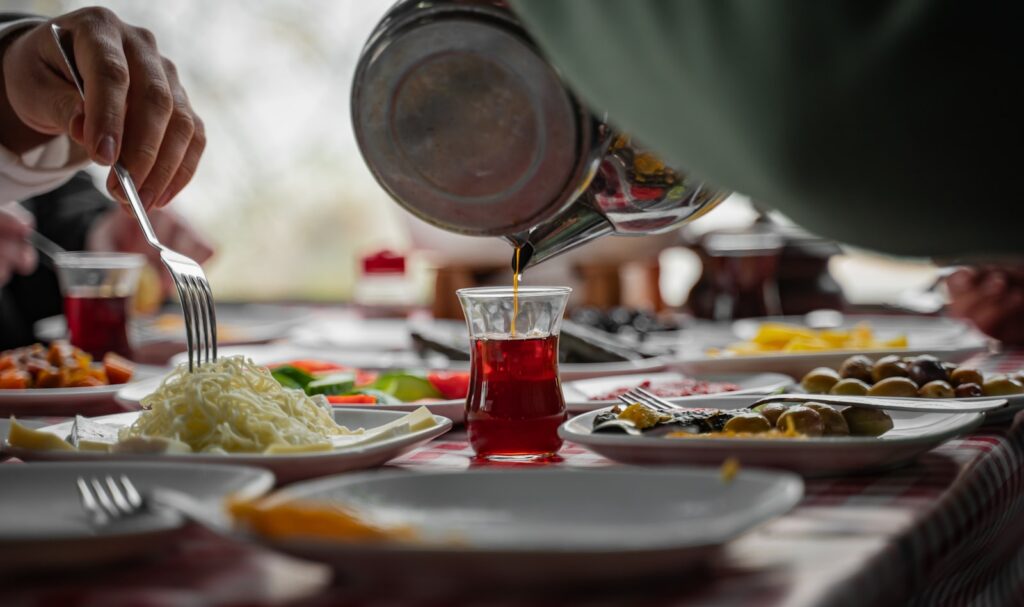
The Emergence of the Serpme Breakfast Culture
In traditional Ottoman eating habits, breakfast was not as varied a meal as it is today. In the palace as well as among the public, warm soups, olives, cheese, and fresh bread consumed during the early morning hours were typical. The late-morning meal, known as kuşluk vakti, was when the main nourishing dishes were served. From the mid-20th century onward, with the widespread cultivation of tea in the Black Sea region and rapid urbanization, breakfast tables underwent a transformation.
The style known as serpme kahvaltı (spread breakfast) is based on filling the entire table with small ceramic or glass plates. The simultaneous presence of sweet, savory, sour, and spicy flavors on the table is the defining characteristic of this culture. For guests following a plant-based or vegan lifestyle, a spread breakfast offers generous choices. Plates of fresh tomatoes, cucumbers, arugula, and fresh mint, crushed olives served with cold-pressed extra virgin olive oil and oregano, tahini-molasses blends, and homemade preserves are naturally plant-based. On the pastry side, spinach or potato gözleme and savory pastries add warmth to the spread. The pastry heritage of Ottoman palace cuisine merged over time with breakfast staples like katmer, layered flaky böreks, and savory pastries, reaching a rich variety.
Richness of Cheese and Olive Varieties
Cheeses and olives form the backbone of a traditional Turkish breakfast. Rather than bringing a single cheese variety, flavors from different regions of Anatolia are presented together. Full-fat sheep or goat milk aged white cheese from the Çanakkale and Ezine regions, Kars gravyer, Van herbal cheese, string cheese and kolot cheese from the Eastern Black Sea, along with fresh kaşar, expand the flavor spectrum on the table.
On the olive side, black and green olives harvested from Aegean and Marmara groves take center stage. Cured black olives, brine-cured olives, and crushed or sliced green olives are seasoned with extra virgin olive oil, lemon juice, and red pepper flakes. Alongside cheeses and olives, savory breakfast pastes such as acuka and muhammara—made from red pepper paste, walnuts, and spices—frequently feature. The structure of these spreads can be viewed as a reflection of the city’s distinct meze culture on breakfast tables. To balance the savory elements, strained honey paired with butter, alongside strawberry, sour cherry, or fig jams, take their place on the spread.
Warm Starters: Menemen and Skillet Eggs
Following cold breakfast items, warm dishes brought to the table elevate the pace of the meal. The iconic warm dish of Turkish breakfast is menemen. Prepared by sautéing finely chopped green peppers in olive oil or butter, adding grated juicy tomatoes, and gently cooking eggs into the mixture, menemen is a communal dish enjoyed by dipping fresh bread. Menemen can also be prepared with cheese or without onions depending on preference. For plant-based diners, a version without eggs—where tomatoes, peppers, olive oil, and spices simmer slowly—is equally satisfying.
Skillet eggs (sahanda yumurta) are cooked by cracking eggs into melted butter inside traditional copper pans. Sliced spiced beef sausage, cured beef, or halloumi cheese can be added. Among warm starters, crispy delights such as pişi, su böreği, and sigara böreği also hold a prominent place.
If you wish to wake up to a classic Istanbul morning in the Historic Peninsula and stay within walking distance of iconic historic landmarks such as Hagia Sophia and Topkapi Palace, Hotel Yasmak Sultan, one of the well-established accommodation choices in the district, offers a comfortable alternative.
The Role of Brewed Tea at Breakfast
The unsung hero of the breakfast table is undoubtedly freshly brewed black tea. In Turkish breakfast culture, Turkish coffee is not consumed at the start or middle of the meal, but after the entire breakfast is finished to complete the original “under-coffee” ritual. The sole beverage accompanying the spread throughout the meal is clear black tea, brewed slowly in double-decked kettles.
Served in tulip-shaped glass cups, tea balances the rich and savory flavors on the table. The freshness of the tea, its deep reddish color traditionally likened to “rabbit’s blood,” and its steaming service are integral parts of the breakfast experience. Much like meze spreads at evening tables, the presentation order of items and keeping the tea constantly fresh on the breakfast table require a refined rhythm.
At the end of breakfast, a cup of medium or plain Turkish coffee, served with rich foam and a small piece of Turkish delight on the side, puts a delightful final touch on this long and enjoyable morning ritual. Starting your day in Istanbul with such a rich spread is a delicious way to directly experience the city’s culture and hospitality.
Executive Chef & Olive Culinary Team
Ottoman Palace & Contemporary Turkish Cuisine
Bringing together centuries-old Ottoman palace recipes and contemporary Turkish gastronomy at Olive Restaurant, overlooking the iconic historic skyline of Istanbul.