

Zeytinyağlı: Why Anatolian Cooking Was Already Vegan
In most restaurants a vegan menu begins as an adaptation: the meat is taken out of an existing recipe, something is put in its place, and the result usually feels short. Anatolian cooking is under no such obligation, because plant-based food is already a category of its own here. It even has a name: zeytinyağlı, the olive oil dishes.
What zeytinyağlı means
It describes vegetables cooked slowly in olive oil and their own liquid, then served cold. No butter, no meat stock, no yoghurt. This is not a preference but a requirement of the method: olive oil stays liquid as the dish cools, butter does not. So these dishes are plant-based because they are eaten cold — not the other way round.
Why there are so many
Along the Aegean and Mediterranean coasts, vegetables arrive in different forms across all twelve months. Artichoke in spring, green beans in summer, leek and celeriac in winter. Because each season’s vegetable meets the same technique, the number of recipes grew on its own. Then there are the greens — the Aegean uses more than fifty wild varieties in the kitchen.
Four classics
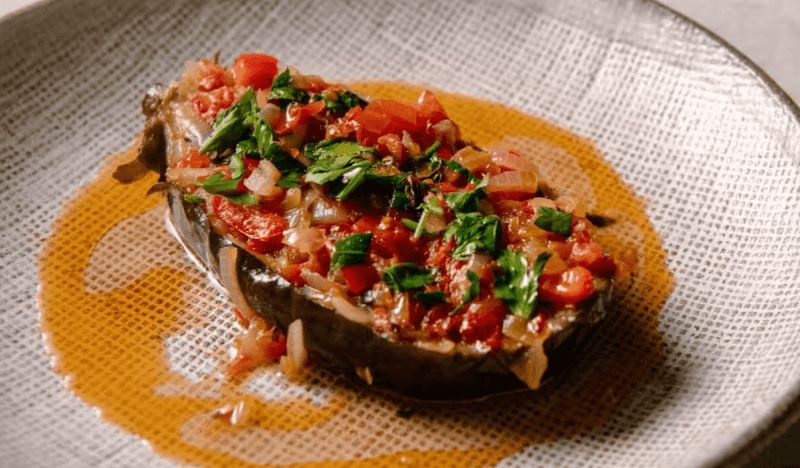
İmam bayıldı: Aubergine, onion, garlic, tomato. The aubergine is not deep-fried but charred or cooked slowly in a little oil until it softens through.
Vine leaves in olive oil: Rice, onion, currants and pine nuts wrapped in vine leaves, served cold. It is an entirely separate dish from the version with meat, and the shared name misleads people.
Barbunya pilaki: Borlotti beans, carrot, potato and plenty of olive oil, served with lemon.
Artichoke: Cooked with peas and carrot in lemon water. Strictly seasonal — finding it fresh outside May is difficult.
The pulses
Beside the olive oil dishes runs a tradition of pulses. Lentil soup, chickpea stews, white beans — all of them can be and are cooked without animal products. The periods when meat was expensive in Anatolia shaped these recipes, and the protein came from the legume.
What this means on our menu
We keep a separate vegan menu: six sections, twenty-three dishes. We built it as a menu in its own right rather than a set of “vegan options”, because the source cuisine already allows for that. Among the mezes are muhammara, acılı ezme and aubergine in tomato sauce; the main courses include vegan köfte with rice stuffing and a tray of garden vegetables.
One thing said plainly: we do not label the vegan dishes as gluten-free, because we have not verified that for all of them. If you have a gluten sensitivity, write to us when you book and our kitchen team will speak with you.
The full list is on the Vegan Menu page.
Executive Chef & Olive Culinary Team
Ottoman Palace & Contemporary Turkish Cuisine
Bringing together centuries-old Ottoman palace recipes and contemporary Turkish gastronomy at Olive Restaurant, overlooking the iconic historic skyline of Istanbul.