


The History of Ashure: 40 Ingredients and 40 Stories Behind One Dessert
The origin of the ashure dessert dates back to antiquity and the legend of Noah’s Ark; in Anatolian culture, it symbolizes the harmonious coexistence of differences, unity, sharing, and abundance. This deep-rooted delicacy, with its rich content where buckwheat, chickpeas, and beans meet dried fruits and nuts, ranks among the most symbolic desserts of Turkish culinary culture.
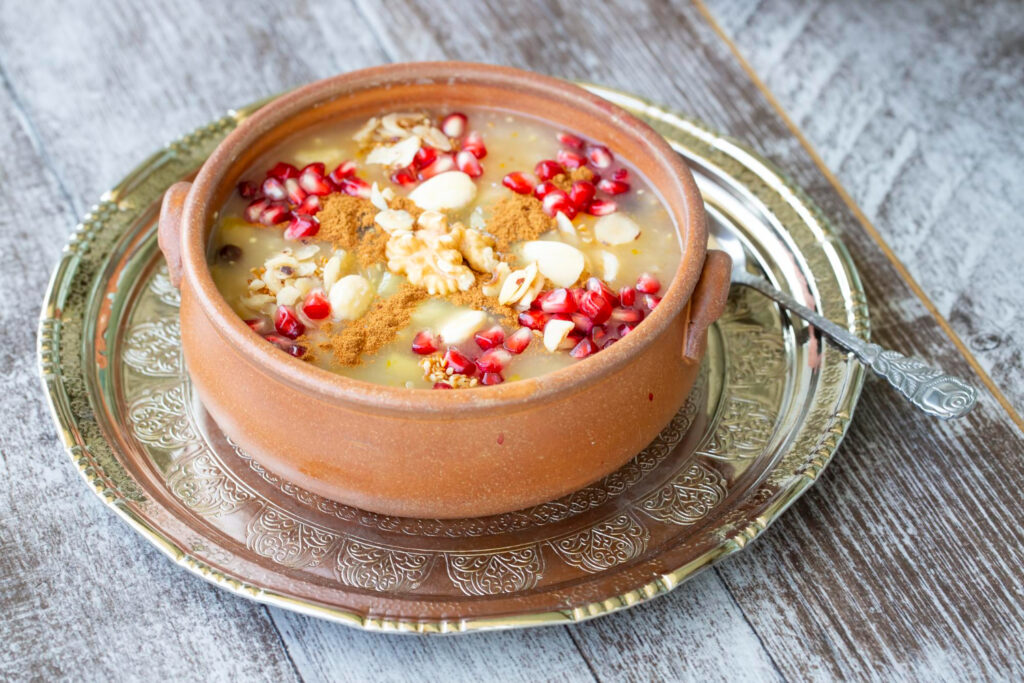
The Legend Reaching from Noah’s Ark to the Present Day
The foundation of the ashure tradition extends back to the legend of Noah’s Flood, one of the oldest narratives in human history. According to belief, when Noah’s Ark ran aground after the deluge, the last remaining provisions on board were gathered and cooked in a single pot. With the coming together of diverse ingredients like wheat, chickpeas, dried figs, raisins, and walnuts, humanity’s first shared meal—ashure—was born. Today, this legend has become a cultural symbol reminding us that even in times of scarcity, abundance multiplies when shared.
Since the Anatolian geography has been the crossroads of different civilizations for centuries, this traditional flavor has diversified and enriched over time. Cooked across a wide geography from Mesopotamia to the Balkans, ashure has gained different flavor profiles with unique touches from each region. In Anatolian cuisine, ashure is not just a food confined to a specific period, but also a way of celebrating seasonal cycles and harvest abundance. The giant pots cooked have taken deep root in our culture as the most elegant excuse to strengthen neighborly relations.
Another important feature of ashure is that, by its very nature, it has a rich composition containing no animal products. Thanks to the legumes, nuts, and citrus peels it contains, it stands out as one of the most delicious Vegan Anatolian Flavors within Anatolian Cuisine. This plant-based balance, unchanged for centuries, allows the dessert to acquire a character that is both light and highly nutritious.
The Symbol of Unity and Abundance: The Ashure Tradition
The ashure tradition represents the harmony of dozens of ingredients from different origins and tastes in a single pot without losing their own identity. Just as in Turkish Meze Culture and soup traditions, the balance of ingredients in ashure requires great mastery. Softening the hard legumes, adjusting the sugar balance of the dried fruits, and the aroma of the pomegranate seeds and cinnamon added on top are the products of collective labor.
The term “40 ingredients” used in the tradition symbolizes not just a numerical quantity, but also richness and abundance. When ashure is to be cooked, families and neighbors combine their ingredients; some bring walnuts, others contribute with clove water. When examining the rich world of sherbet-based or milk-based Turkish desserts and considering the differences between desserts, it is clearly seen that ashure stands apart from all other sweets with its ritual of preparation and sharing.
The prepared bowls of ashure are distributed to at least seven or forty houses in the neighborhood. This distribution ritual serves to keep solidarity and social bonds alive. Touches like pine nuts, currants, sesame, and rose water decorating the dessert transform the presentation into a visual feast. Everyone who tastes the dessert conveys their wishes of abundance and health to the household that cooked it.
A Sweet Heritage Extending from Palace Kitchens to Homes
Within Ottoman Palace Cuisine, ashure was a prestigious treat prepared by specially assigned chefs in the palace halva houses (helvahane) and distributed to a wide audience, from palace officials to the public. In the Matbah-ı mire (Imperial Kitchens) located inside Topkapi Palace, when the month of ashure arrived, cauldrons would boil for days, and healing spices recommended by the Palace Physicians were added to the dessert. Ashure prepared in the palace was presented in two different consistencies: strained (szme) and with whole grains (dane).
It was an elegant part of palace protocol for the sultan, the valide sultan (queen mother), and the grand vizier to send treats to one another in crystal or silver bowls called “ařurelik”. The ashure placed inside these finely crafted vessels was decorated with gold leaf or precious nuts, accompanied by amber and musk aromas. Today, the Ottoman cuisine options offered in restaurants that preserve their historical texture carry this refined dessert understanding of palace cuisine to the present day.
If you want to reflect the magnificence of the Ottoman palace and the historical atmosphere of Sultanahmet in your stay, Hotel Sultania (hotelsultania.com), designed in harmony with the spirit of the region, is an excellent choice for accommodation. Reflecting the elegance of palace culture onto its streets, the Historical Peninsula offers an unforgettable backdrop for gastronomy enthusiasts wishing to discover the culinary heritages of the past.
A Cultural Gastronomy Experience in the Historical Peninsula
The Historical Peninsula is a fascinating region that still preserves the cultural atmosphere where centuries-old flavors like ashure were born and shaped. On a walk you take from the Sirkeci neighborhood towards Sultanahmet, you can pass under the historical trees of Glhane Park and reach the deep-rooted culinary stops around Hagia Sophia and Topkapi Palace. The region is home to venues that blend authentic culinary heritage with modern touches.
Located in the Sirkeci area, Olive Anatolian Restaurant offers its guests a refined selection of Anatolian and palace cuisine on its terrace with views of the Bosphorus and the historical texture. With a menu extending from meze varieties to olive oil dishes, baked specialties to vegan and Gluten-Free Turkish Cuisine alternatives, the venue brings an authentic taste journey together with a unique view. Additionally, through Cooking Workshop events organized from time to time, it transmits the intricacies of Turkish culinary culture both theoretically and practically to enthusiasts.
| Experience Type | Approximate Duration | Content and Focus |
|---|---|---|
| Traditional Menu Tasting | 1.5 – 2 Hours | Ottoman palace dishes, meze varieties, seasonal olive oil dishes, and traditional dessert presentations. |
| Culinary Workshops | 2 – 3 Hours | Basic techniques of Turkish cuisine, secrets of cooking with olive oil, and authentic recipe applications. |
| Historical Peninsula Cultural Route | Half Day | Gourmet and historical walking steps around Glhane Park, Topkapi Palace, and Sirkeci. |
At the restaurant located within walking distance of historical landmarks, you can unwind from the day’s fatigue accompanied by the view of the Bosphorus and taste the rarest examples of traditional Turkish cuisine. Whether you are looking for a romantic dinner or a culture-filled gastronomy break, this authentic atmosphere offered by the Historical Peninsula will inspire you.
Just as ashure combines forty different ingredients in a single harmony of flavor, Istanbul continues to keep different cultures and culinary heritages alive in the same melting pot. As you stroll through the streets of this ancient city, you can trace the path of flavor and history, and collect unforgettable memories.
Sık Sorulan Sorular
What ingredients are traditionally used in Ashure dessert?
The base of Ashure dessert consists of wheat, chickpeas, and white beans. Sweetened with sugar or molasses, the mixture is enhanced with dried apricots, figs, raisins, citrus peels, and rose water, and topped with pomegranate seeds, walnuts, hazelnuts, cinnamon, and pine nuts.
Where exactly is Olive Anatolian Restaurant located?
The restaurant is located in the Sirkeci district of Istanbul's Historical Peninsula. It is situated within a short walking distance of iconic landmarks such as Sultanahmet, Gülhane Park, and Topkapı Palace.
How was Ashure prepared in the Ottoman palace cuisine?
Prepared by master chefs in the palace's dessert kitchens (helvahane) in either strained or textured consistency, Ashure was infused with amber, musk, and healing spices. It was served to palace officials and statesmen in specially designed silver or crystal Ashure bowls.
Is prior reservation required to participate in cooking workshops?
Since culinary workshops featuring traditional culinary arts are organized with limited capacity, participants are recommended to make a reservation in advance. Information regarding the current schedule and participation details can be obtained through the venue's official communication channels.
Are there options for vegan and vegetarian guests on the menu?
Yes, the restaurant offers a rich selection of vegan and vegetarian alternatives consisting of traditional olive oil dishes, vegetable courses, and plant-based appetizers.
Is Ashure dessert consumed only during the month of Muharram?
Although Ashure is traditionally cooked and distributed during the month of Muharram, today it is enjoyed and consumed throughout the year in restaurants and homes as an iconic dessert of Turkish culinary culture.
What kind of venue should be chosen for dinner in the Historical Peninsula?
Choosing terrace venues with scenic views and authentic concepts that reflect the historical atmosphere and offer deep-rooted Anatolian and palace recipes made with quality ingredients enriches the travel experience.
What views can be seen from the terrace of Olive Anatolian Restaurant?
The silhouette of the Bosphorus and the Historical Peninsula can be viewed from the restaurant's terrace area. The view's perspective may vary depending on the location and angle of the tables.
Executive Chef & Olive Culinary Team
Ottoman Palace & Contemporary Turkish Cuisine
Bringing together centuries-old Ottoman palace recipes and contemporary Turkish gastronomy at Olive Restaurant, overlooking the iconic historic skyline of Istanbul.