


A Guide to Turkish Meze: What Are Muhammara, Hummus, Mütebbel and Şakşuka?
Meze is not the opening of a meal so much as a course of its own. It arrives before the main dishes on a Turkish table, yet it is often the part people talk about afterwards. The difficulty is that unfamiliar names turn choosing into guesswork. Here is what sits inside the dishes you are most likely to meet.
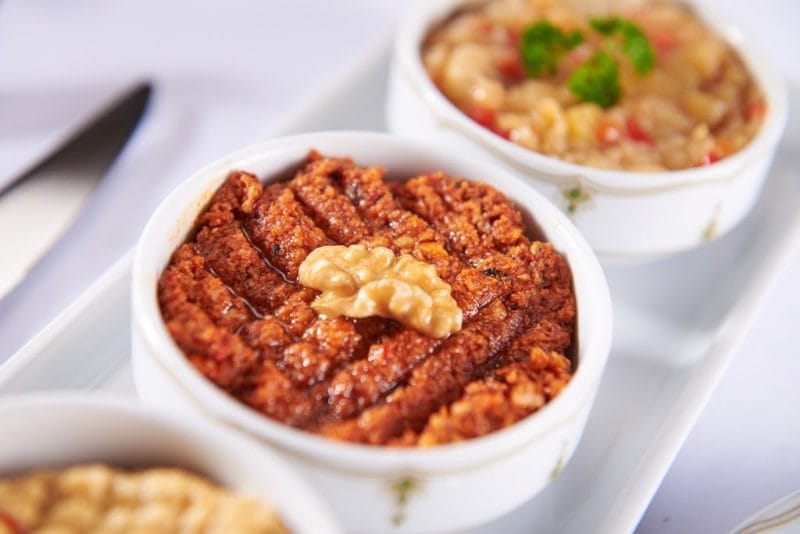
Muhammara
Red pepper, walnut, pomegranate molasses and breadcrumb, worked together by hand. It comes from the southeast of the country. Sweet, sour and gently hot arrive at the same time, and the oil in the walnuts sets its texture. Because of those walnuts, this is usually the one meze to avoid if you have a nut allergy.
Hummus
Chickpea, tahini, lemon and garlic. In Turkey it is served warm more often than not, finished with olive oil and pepper flakes. Vegan. It fills you quickly with bread, which is why it works better in the middle of the plate than at the start.
Mütebbel
Charred aubergine folded into tahini and yoghurt. It is often confused with baba ganoush; the yoghurt is the difference, making mütebbel creamier and less smoky. It contains dairy, so it is not vegan.
Şakşuka
Fried aubergine and peppers in tomato sauce. In Turkey it is served cold as a meze — it shares a name with the North African egg dish but nothing else. Made with olive oil, and vegan.
Atom
Strained yoghurt, fried dried peppers and butter. Do not let the name mislead you: this is usually the hottest thing on the plate. It helps to keep something plain beside it.
Haydari and cacık
Both are yoghurt-based, but haydari is thick, made with strained yoghurt and usually mint, and eaten with a spoon. Cacık is thinned, contains cucumber, and sits close to a drink in consistency. If you see both on a menu, haydari belongs to the meze course and cacık goes alongside the main dish.
Stuffed vine leaves
Rice wrapped in vine leaves. The olive-oil version is served cold and is vegan; the version with meat comes hot and is eaten with yoghurt. If the menu says zeytinyağlı, it is the cold, plant-based one. Our kitchen makes a version with sour cherry, where dried cherries go into the rice and set up a sweet-sour balance.
How to build the plate
Five or six mezes are enough for a table of four. A good spread is balanced: one yoghurt-based, one made from pulses, one vegetable, one hot, and one from the sea. Taking some of them with raw vegetables rather than bread keeps the palate awake. And if main courses are coming, knowing when to stop matters — this course turns into the whole meal more easily than you would think.
You can see all eleven of our cold starters on the à la carte page, with the vegan ones and those containing nuts marked separately.
Executive Chef & Olive Culinary Team
Ottoman Palace & Contemporary Turkish Cuisine
Bringing together centuries-old Ottoman palace recipes and contemporary Turkish gastronomy at Olive Restaurant, overlooking the iconic historic skyline of Istanbul.